
Boils are painful, pus-filled skin infections that typically need medical evaluation and, in many cases, professional drainage to heal properly. At Doctors of New York in Flushing, Queens, our physicians treat boils with same-day, walk-in appointments, no referral needed. We serve patients from Flushing, Long Island City, Astoria, Jackson Heights, Forest Hills, Bayside, and surrounding neighborhoods. If you have a painful, swollen lump under your skin that is getting worse, do not wait, walk in or call us at +1 (929) 928-0175.
A boil might seem like a minor skin problem at first. It starts as a red, tender lump, and for a day or two you might think it will just go away on its own. Sometimes it does. But more often than not, that lump fills with pus, grows larger, and starts causing real pain. By the time most patients come see us at Doctors of New York, they’ve already spent a week hoping it would resolve and it has only gotten worse. If that sounds familiar, you are not alone, and you’ve come to the right place.
Boils are bacterial skin infections, most commonly caused by Staphylococcus aureus. They develop in hair follicles or oil glands and can appear anywhere on the body, though the face, neck, armpits, buttocks, and thighs are especially common sites. Some people are more prone to recurring boils due to underlying conditions like diabetes, a weakened immune system, or close contact with someone carrying staph bacteria. As a doctor for boil treatment in Flushing, we see these cases every week, and we know that proper treatment makes a real difference in how quickly patients recover and whether the infection spreads.
Not every red bump on your skin is a boil, and not every boil needs a clinic visit. So how do you know when it’s time to come in? Here are the signs we tell patients to watch for:
If any of these apply to you, seeking urgent care for boils in Queens is the right call. Attempting to squeeze or lance a boil yourself is something we strongly advise against it can push the infection deeper into surrounding tissue and dramatically increase the risk of spreading bacteria into your bloodstream.
When you come to Doctors of New York for boil removal urgent care, our approach is straightforward and designed to get you relief as quickly as possible. We start with a thorough physical examination of the affected area. In most cases, a boil that has come to a head, meaning it has a visible, soft center, can be treated with a procedure called incision and drainage (I&D). This is the most effective way to treat a boil, and here’s what it generally involves:
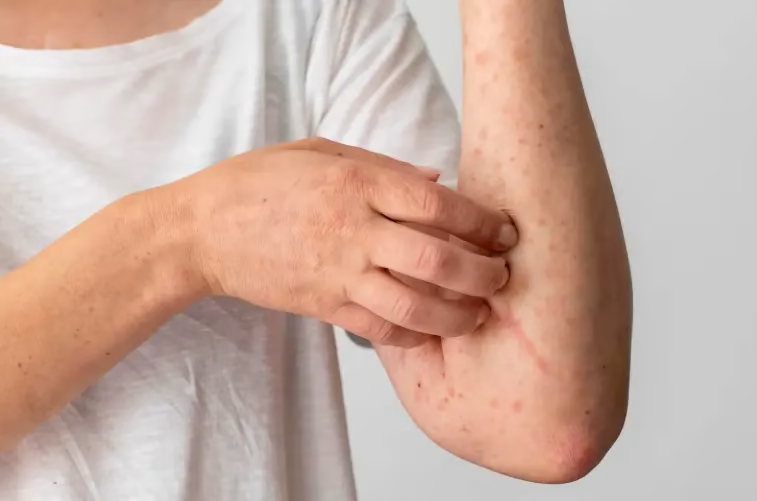
Get prompt treatment for swollen, painful boils before they worsen. Our providers offer effective care to relieve discomfort and support faster healing.
If the boil has not yet come to a head, we may recommend a short course of warm compress therapy to encourage it to mature before drainage. In cases where there is surrounding cellulitis, swollen lymph nodes, or fever, we may prescribe oral antibiotics right away, even before drainage is performed. Patients with diabetes or immune conditions are monitored more carefully, since these groups are at higher risk for complications like MRSA or a deeper abscess that may require additional treatment.
Our clinic is a trusted choice for urgent care for boils in Queens, offering fast and effective treatment options without delays. We also test for MRSA (methicillin-resistant Staphylococcus aureus) when it is clinically indicated. MRSA is more resistant to standard antibiotics and requires specific treatment. As a doctor for boil treatment in Flushing with experience in infectious skin conditions, we know when to look for it and how to manage it appropriately.
We understand that skin infections don’t wait for a convenient appointment slot. That’s why Doctors of New York is set up to see patients with boils and skin abscesses the same day, without an appointment. If you’re dealing with a painful boil right now and are looking for urgent care for boils in Queens, just walk into our Flushing clinic. The team at our urgent care clinic will evaluate your condition promptly and make sure you leave with a clear treatment plan. You can also call us ahead at +1 (929) 928-0175 if you have questions or want to check wait times before coming in.
We serve patients from across the borough and nearby communities — Flushing, Long Island City, Astoria, Jackson Heights, Forest Hills, Bayside, and beyond. No referral is needed, and we accept most major insurance plans. Our goal is simple: get you the treatment you need, quickly and without unnecessary hassle.
If you want to understand the procedure in more detail, read our guide on boil lancing at urgent care before your visit.If you need urgent care for boils in Queens, our walk-in clinic ensures you are seen without long waiting times.
After urgent care boil removal, most patients feel significantly better within 24 to 48 hours. The pressure and throbbing pain that comes with a pus-filled boil tends to resolve quickly once proper drainage has occurred. That said, recovery is not always immediate, and following post-procedure care instructions is important. Here is what healing typically looks like:
Most people recover without complications. Scarring is possible but usually minimal, especially when the boil is treated before it becomes very large. The key is not waiting too long, the earlier you seek treatment, the simpler and more effective the care tends to be.
Some patients come to us not with their first boil, but their third or fourth in the span of a few months. Recurrent boils, medically called furunculosis, are a real and frustrating problem, and they often signal an underlying issue that needs to be addressed beyond just draining each boil as it appears. As a doctor for boil treatment in Flushing, we take the time to look at the bigger picture when patients present with recurring infections.
Common contributing factors include uncontrolled diabetes, which impairs the immune response to bacterial infections, chronic nasal carriage of Staphylococcus aureus (meaning the bacteria live in your nasal passages and repeatedly re-infect your skin), close household contact with someone carrying MRSA or staph, and skin conditions that disrupt the normal barrier function of the skin. In some cases, we run blood work to screen for diabetes or immune deficiencies, swab the nose and skin to test for staph carriage, and may recommend a decolonization protocol using medicated washes and nasal antibiotic ointment.
If you’ve been bouncing between urgent care boil removal visits without getting to the root of why they keep coming back, it may be time for a more thorough evaluation. That is exactly the kind of care we offer at Doctors of New York.

Patients often come in describing a “boil” when what they actually have is a sebaceous cyst or a deeper abscess. These conditions can look similar, but they have different causes and require different approaches. A true boil is an infection of a hair follicle caused by bacteria, usually staph. A sebaceous cyst is a non-infectious, slow-growing lump filled with keratin, it can become infected and look like a boil, but the underlying cause and treatment differ. An abscess is a broader collection of pus in soft tissue that can develop from an infected boil, a wound, or other causes, and tends to be larger and deeper.
Getting the diagnosis right matters because it determines the correct treatment. Draining a sebaceous cyst the same way you would drain a boil, for example, often leads to recurrence because the cyst wall needs to be removed to prevent it from refilling. As a doctor for boil treatment in Flushing, we always examine the lesion carefully and, when needed, send tissue samples for laboratory analysis so you get the right treatment the first time.
There are a lot of clinics in Queens, so why do patients from Astoria, Jackson Heights, Long Island City, and Forest Hills make the trip to our Flushing location? A few reasons come up again and again. First, we are genuinely accessible; no appointment is needed, wait times are reasonable, and our team treats patients with the kind of attention and thoroughness that can feel hard to find at a large, impersonal urgent care chain. Second, we have the experience to handle everything from a simple boil to complex recurrent infections in patients with diabetes or immune conditions. Third, we speak your language, our staff serves a diverse, multilingual community and makes sure every patient understands their diagnosis and treatment plan.
When you need a doctor for boil treatment in Flushing who will take your concern seriously, treat it effectively, and help you understand how to prevent it from coming back, we are here for that. And when you need urgent care for boils in Queens, and you need it today, we are here for that too.
Small boils sometimes resolve on their own with warm compresses over several days. However, if a boil is growing, very painful, associated with fever, or located on the face, you should seek medical care rather than waiting it out. Attempting to pop or lance a boil at home significantly increases the risk of spreading the infection.
Not always. For many localized boils, drainage alone is sufficient treatment. Antibiotics are typically added when there is surrounding cellulitis, fever, a boil on the face or neck, a large or deep abscess, or when the patient has underlying conditions like diabetes or a weakened immune system. Your doctor will make this determination during your visit.
We use a local anesthetic before making any incision, so the procedure itself is generally not painful. Many patients actually describe immediate relief from the pressure and throbbing once drainage begins. There may be some soreness around the site for a day or two afterward as the area heals.
Most patients notice significant improvement within 24 to 48 hours after drainage. Full healing of the skin typically takes one to two weeks depending on the size of the boil and individual healing factors. Keeping the wound clean and following your provider’s instructions makes a big difference in recovery speed.
Recurring boils are often a sign of an underlying condition such as diabetes, immune deficiency, or nasal carriage of staph bacteria. If you’ve had more than two or three boils in a year, it’s worth having a thorough medical evaluation rather than just treating each one individually. Our team at Doctors of New York can help identify and address the root cause.
Yes. Doctors of New York welcomes walk-in patients for boil evaluation and treatment. You do not need an appointment or a referral. We serve patients from Flushing, Long Island City, Astoria, Jackson Heights, Forest Hills, Bayside, and surrounding Queens communities. If you prefer to call ahead, you can reach us at +1 (929) 928-0175.
If you are dealing with a painful, swollen boil and want to see a doctor today, Doctors of New York is ready to help. As a trusted doctor for boil treatment in Flushing, we offer same-day, no-appointment-needed urgent care for boils and skin infections across Queens. Our clinic is conveniently located for patients coming from Flushing, Astoria, Jackson Heights, Long Island City, Forest Hills, and Bayside.
Whether this is your first boil or a recurring problem you’ve been struggling with for months, we will take the time to evaluate your situation thoroughly and provide treatment that actually works. We also provide primary care and pain management services.
Walk in to see us at your convenience, or give us a call at +1 (929) 928-0175 to speak with our team. We are here when you need us.
Sick today, back pain tomorrow, check-up overdue? We’ve got it all covered. Doctors of New York offers same-day care for urgent needs, chronic pain, and everyday health, on your time. Easy care, when you need it!
Call us today or email us at info@doctorsofnewyork.com, or walk into our clinic to regain your health and peace of mind.