Quick Answer: Yes, you can go to urgent care for an allergic reaction if your symptoms are mild to moderate, such as hives, rashes, localized swelling, sneezing, or persistent itching. Urgent care centers can provide antihistamines, steroids, and other fast-acting treatments without a long ER wait. However, if you experience difficulty breathing, throat or tongue swelling, dizziness, or any signs of anaphylaxis, call 911 or go to the nearest emergency room immediately. For Queens residents dealing with food, environmental, or seasonal allergy flare-ups, knowing which level of care to seek can make all the difference.
If you’ve ever broken out in hives after a meal, started itching uncontrollably after spending time outdoors, or felt your nose and eyes go haywire during a walk through Kissena Park in spring, you already know how disruptive an allergic reaction can feel. And in those moments, the first question that crosses most people’s minds is: do I need to see a doctor, and if so, where do I go?
For residents of Flushing, Jackson Heights, Astoria, Forest Hills, Bayside, and the surrounding neighborhoods, understanding how to respond to an allergic reaction is genuinely useful health knowledge, not just because allergies are common, but because the wrong call, waiting it out when you shouldn’t, or rushing to the ER for something that didn’t need it, can cost you in time, stress, and money. Let’s walk through exactly what you need to know.
What Actually Happens During an Allergic Reaction
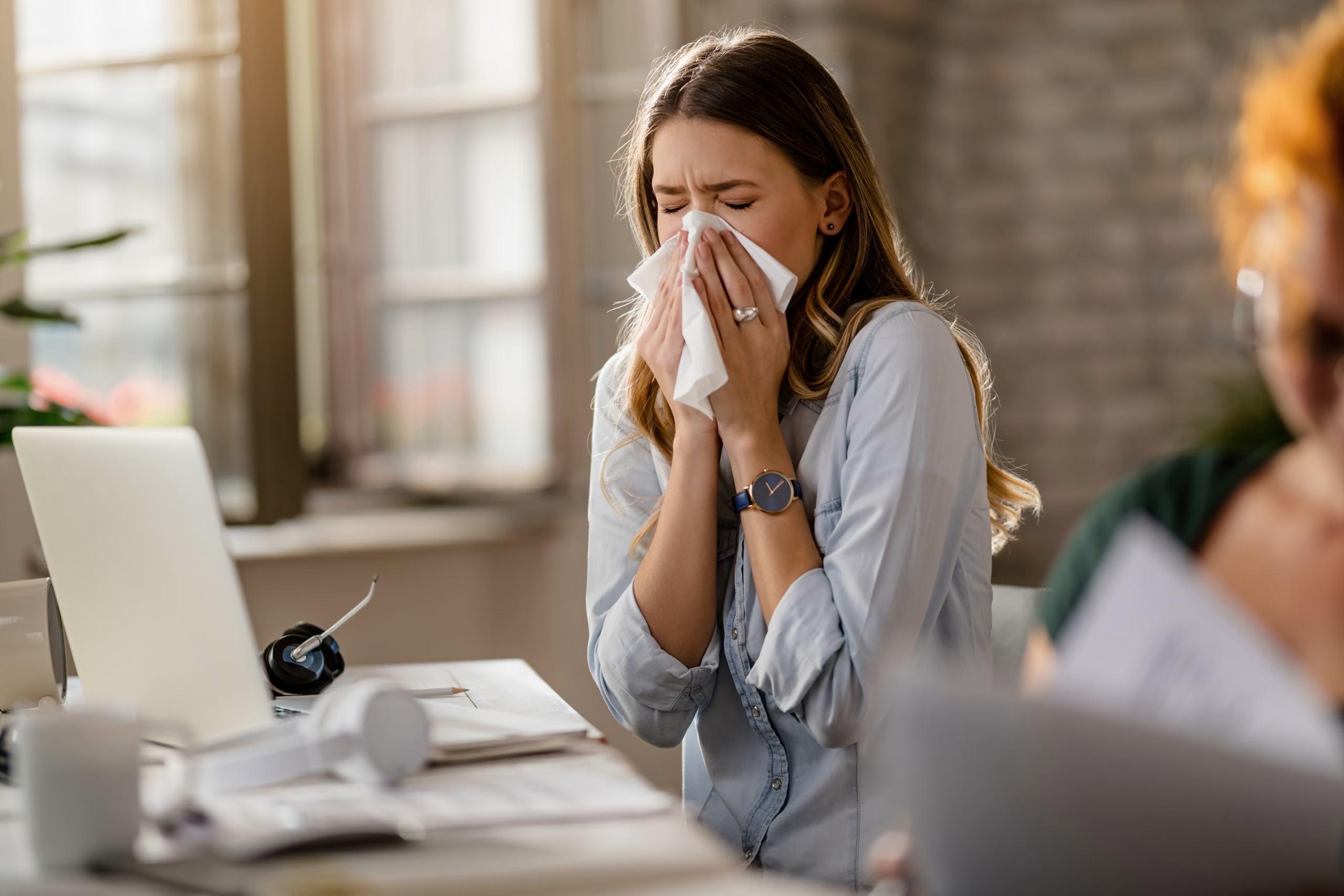
Your immune system is designed to recognize threats. But sometimes it mistakenly tags a harmless substance, pollen, a shrimp, a bee sting, a medication, as dangerous, and launches a defense response. It releases a chemical called histamine, which causes the familiar symptoms: itching, swelling, redness, inflammation. Most of the time, this process stays manageable. But in some people, or with certain triggers, the response becomes much more intense and can affect multiple body systems at once. That escalation is what separates a mild reaction from a medical emergency.
Reactions generally fall into three categories. Mild ones include localized hives, sneezing, runny nose, watery eyes, and minor skin irritation. Moderate reactions involve more widespread hives, notable swelling in an area (though not the throat), or allergy-related breathing symptoms like mild wheezing. Severe reactions, including anaphylaxis, involve the throat, airway, and cardiovascular system, and can be fatal within minutes without treatment. Knowing which category you’re in is exactly the kind of judgment that determines whether urgent care for allergy symptoms is the right move, or whether you need an ambulance.
Can I Go to Urgent Care for Allergies? Here’s the Honest Answer
The answer is yes, for most day-to-day allergic reactions. If you’re dealing with hives that appeared after eating something new, a skin rash following contact with a plant or chemical, a swollen insect bite that’s red and uncomfortable but not spreading to your face or throat, or seasonal allergy symptoms that won’t quit despite over-the-counter medications, urgent care is a completely appropriate, efficient place to get treated. You don’t need to wait days for a primary care appointment, and you certainly don’t need the ER.
Urgent care in Flushing, Queens, is exactly the type of walk-in resource built for this kind of situation. At Doctors of New York in Flushing, our providers can assess your symptoms right away, no appointment needed, and quickly determine whether your reaction needs prescription medication, a steroid injection, monitoring, or referral for follow-up allergy testing. It’s a faster, more cost-effective option than the emergency room for anything that isn’t life-threatening.
So if you’ve been wondering whether you can go to urgent care for allergies, the answer is yes, and it’s often the smartest first stop for moderate reactions.
If you’re in Flushing or a nearby neighborhood and dealing with an uncomfortable allergic reaction, don’t sit with it. Call Doctors of New York at +1 (929) 928-0175 or walk in, we’re here to help you get the right treatment quickly and get back to feeling like yourself.
What Urgent Care Can Do for an Allergic Reaction
People are sometimes surprised by how much urgent care can actually offer. A good urgent care center doesn’t just hand you Benadryl and send you home. Here’s a more realistic picture of what you can expect:
- A thorough symptom assessment, including vital signs and a review of your medical history, to determine the severity of the reaction and what triggered it.
- Prescription-strength antihistamines, stronger and faster-acting than anything you’d buy over the counter, to reduce hives, itching, and swelling.
- Corticosteroids, either oral or injected, to calm moderate inflammatory responses, particularly helpful for widespread skin reactions, swollen eyes, or reactions that aren’t responding to antihistamines alone.
- Nebulizer or bronchodilator treatments if the reaction is causing allergy-induced wheezing or tightness, similar to an asthma-like response.
- Epinephrine, in cases where a reaction is escalating and needs to be stopped from progressing further.
- Monitoring for a period of time to confirm you’re stable before you leave.
- A prescription and a follow-up plan, including referrals for allergy testing if the cause of your reaction is unclear.
This is a meaningful level of care for anyone dealing with an uncomfortable but non-life-threatening reaction. If someone can go to urgent care for allergie, and they clearly can, they’re accessing real clinical treatment, not just basic first aid.
When Queens Allergies Get Particularly Bad
Queens residents deal with a specific allergy burden that’s worth understanding. New York City’s allergy season typically runs from late February through October, with the worst stretches hitting in April and May (tree pollen from oak, birch, maple, and elm) and again in September (ragweed). Spring 2025 was one of the most intense allergy seasons in recent NYC history, with pollen counts regularly hitting “Very High” across all five boroughs.
What makes it worse in Queens specifically is density. Flushing Meadows-Corona Park, the tree-lined streets of Forest Hills and Bayside, and the outdoor markets throughout Jackson Heights and Astoria all contribute to concentrated pollen exposure. Add to that the urban canyon effect, where tall buildings trap and concentrate airborne allergens in narrow corridors, and you’ve got a real recipe for persistent seasonal misery.
Seeking urgent care for seasonal allergies when your usual medications aren’t cutting it is a practical, sensible step. A provider can assess whether your symptoms are purely allergic or have developed into something like a sinus infection, prescribe a stronger medication regimen, or help you build a management plan before next season’s pollen surge.
Signs You Should Go to the ER Instead of Urgent Care
This is the most important thing to understand. While urgent care handles the majority of allergic reactions, there are specific symptoms that mean you should skip urgent care entirely and go straight to the emergency room, or call 911.
- Difficulty breathing, wheezing, or a feeling that your airway is tightening or closing.
- Swelling of the throat, tongue, or face, especially if it’s progressing quickly.
- A rapid, weak, or irregular pulse.
- Dizziness, lightheadedness, confusion, or fainting.
- A sudden drop in blood pressure, which can cause pallor and extreme weakness.
- Nausea or vomiting alongside a rash, when two or more body systems are involved, that’s a hallmark of anaphylaxis.
- Using an EpiPen but symptoms continuing or returning, always go to the ER after using epinephrine, even if you start to feel better. Biphasic anaphylaxis, a second wave of symptoms hours later, is a real and serious risk.
Urgent care centers are not equipped to intubate or provide the advanced life-support interventions that anaphylaxis sometimes requires. The ER is the only appropriate setting for these situations. Do not drive yourself if you’re experiencing any of the above, call 911.
A Practical Decision Guide for Queens Residents
Think of it this way. When you notice an allergic reaction, ask yourself two honest questions: Is my breathing affected in a serious way, and is my throat or face swelling? If the answer to either is yes, call 911 or head straight to the ER. That is not a situation for urgent care.
For everything else, the itchy hives after trying a new dish in Flushing’s food court, the persistent eye irritation and congestion that’s been with you since pollen season started, the skin rash after brushing against something in the park, the bee sting that’s swelling but manageable, urgent care is the right answer. You can get real, effective treatment without a long wait, without an overwhelming hospital bill, and without needing to schedule an appointment days in advance.
The American Academy of Allergy, Asthma & Immunology (AAAAI) recommends that anyone with a history of severe allergic reactions always carry an epinephrine auto-injector and work with a provider to develop a written allergy action plan. Urgent care providers can also support this planning and refer you to an allergist for testing and long-term management.
How to Prepare Before You Arrive at Urgent Care
A little preparation helps the visit go faster. Try to bring or recall the following:
- What you think triggered the reaction, something you ate, touched, or were exposed to.
- When symptoms started and how quickly they appeared or progressed.
- Any medications you’ve already taken (OTC antihistamines, etc.) and when.
- A list of your current medications and any known allergies.
- Whether you’ve had a severe allergic reaction in the past, and whether you carry an EpiPen.
This information helps the provider make faster, more accurate decisions about your treatment, and it helps rule out anything that might need a higher level of care.
At Doctors of New York, serving Flushing, Long Island City, Astoria, Jackson Heights, Forest Hills, Bayside, and neighboring communities, our providers are experienced in assessing and treating the full range of allergic reactions. Whether it’s a mystery rash, a seasonal flare-up that’s getting out of hand, or a food reaction you want evaluated properly, we’re available as a walk-in or by appointment. Reach us at +1 (929) 928-0175 to book a same-day visit, or stop by our Flushing clinic, no referral needed.
Frequently Asked Questions
- Can I go to urgent care for an allergic reaction? Yes. Urgent care is appropriate for mild to moderate allergic reactions, including hives, rashes, localized swelling, sneezing, itchy eyes, and skin irritation. Providers can administer prescription-strength antihistamines, steroids, and other treatments quickly. If your symptoms involve breathing difficulty, throat swelling, dizziness, or signs of anaphylaxis, go to the ER or call 911 instead.
- What will urgent care do for an allergic reaction? Urgent care providers will assess your symptoms and vital signs, identify the likely cause, and administer treatment based on severity. This typically includes antihistamines to reduce itching and swelling, corticosteroids for moderate inflammation, nebulizer treatments for breathing symptoms, and monitoring. They may also prescribe medications for follow-up care and refer you for allergy testing.
- How do I know if my allergic reaction is an emergency? Seek emergency care immediately if you experience: difficulty breathing or wheezing, swelling of the throat or tongue, rapid or weak pulse, dizziness, fainting, confusion, vomiting alongside a rash, or if symptoms persist after using an EpiPen. These are signs of anaphylaxis and require 911 or an emergency room, not urgent care.
- Can urgent care treat seasonal allergies? Yes. If your seasonal allergy symptoms, congestion, sneezing, itchy eyes, sinus pressure, aren’t responding to over-the-counter medications, urgent care can evaluate you and prescribe stronger treatments like prescription antihistamines, steroid nasal sprays, or short-term oral steroids. They can also check for secondary complications like sinus infections.
- Is urgent care or the ER better for hives? Urgent care is typically the right choice for hives that are uncomfortable but not spreading to the throat or face, and where breathing remains normal. The ER is necessary if hives are accompanied by throat tightness, breathing difficulty, rapid pulse, or dizziness, which may indicate anaphylaxis.
- Should I go to urgent care if I had an allergic reaction but feel better now? It’s still a good idea to get checked out, especially if the reaction was more than just minor itching. Some allergic reactions have a second wave (biphasic anaphylaxis) that can occur hours later. A provider can assess your stability, prescribe preventive medication, and advise you on what to watch for.
- Can urgent care prescribe an EpiPen? Yes, in most cases. If your urgent care visit reveals that you have a significant allergy risk, the provider can write a prescription for an epinephrine auto-injector (EpiPen) and explain how to use it. This is an important part of long-term allergy safety management.
- What’s the difference between going to urgent care vs. an allergist for allergies? Urgent care addresses immediate or acute symptoms, reactions that need treatment today. An allergist is a specialist who provides long-term management, including allergy testing (skin prick tests, blood tests), immunotherapy (allergy shots), and personalized prevention plans. If you’re having frequent or severe reactions, urgent care is a great starting point, but a follow-up with an allergist is worth pursuing.