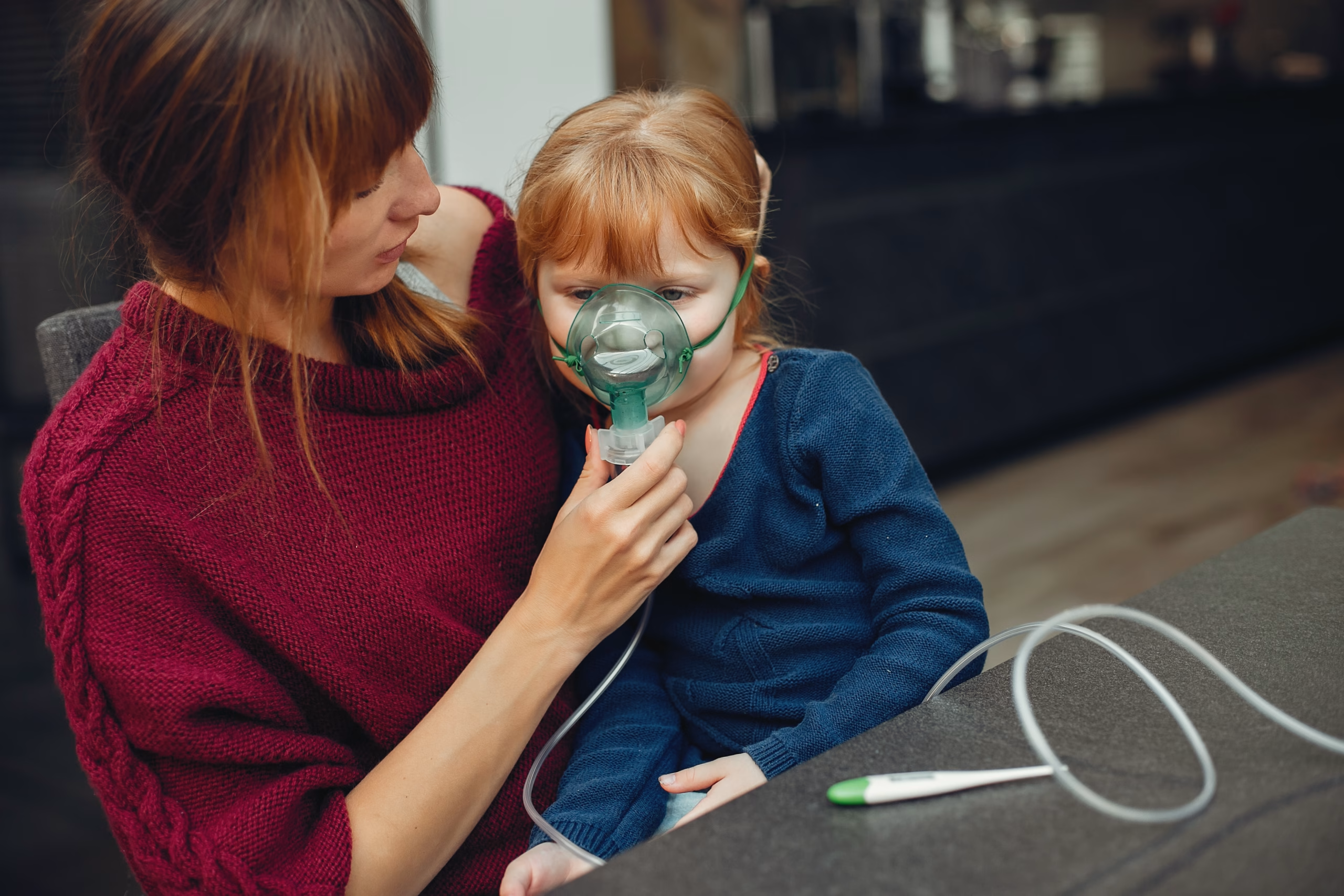
Asthma in children causes recurring episodes of wheezing, coughing (especially at night), shortness of breath, and chest tightness due to inflamed, narrowed airways. It is one of the most common chronic conditions in childhood and the leading cause of pediatric ER visits and missed school days in the U.S.
Parents should seek emergency care immediately if a child’s lips turn blue, if a rescue inhaler stops working, or if the child cannot speak in full sentences. With early diagnosis and a personalized treatment plan, most children with asthma can live fully active, healthy lives.
Hearing your child cough through the night or watching them stop mid-run to catch their breath can be deeply unsettling. The instinct is to assume it’s just a cold, seasonal allergies, or something that will pass on its own.
And sometimes it is. But for millions of families across the U.S., and especially in dense urban communities like those throughout Queens and New York City, those recurring episodes turn out to be asthma. It’s the most common chronic condition in childhood, yet it’s frequently missed in its earlier stages, often mistaken for something else entirely. Knowing what to look for, what questions to ask, and when to act can genuinely change the outcome for your child.
Understanding asthma treatment in Queens starts with understanding the condition itself. Asthma affects approximately 7.5 million children in the United States, and New York State alone reports over 315,000 children currently living with it. It is the leading driver of missed school days and one of the top reasons children end up in the emergency room. At Doctors of New York, serving families from Flushing, Jackson Heights, Astoria, Long Island City, Forest Hills, and Bayside, we see the full picture of how asthma affects children in our communities, and how much better things go when families have the right information early.
What Actually Happens in the Airways
Asthma is a chronic inflammatory disease. When a child with asthma encounters a trigger, their immune system responds by causing the lining of the airways to swell, the surrounding muscles to tighten, and the airways to fill with sticky mucus. The result is a narrowed airway, and less air moving in and out of the lungs. This is what produces the characteristic cough, wheeze, and breathlessness that parents notice. It is not simply “sensitive lungs” in a loose sense. The inflammation is real, measurable, and when left unmanaged over time, can contribute to structural changes in the airway itself.
Genetics plays a meaningful role. A child with one asthmatic parent has a significantly elevated risk. But environment matters enormously as well, particularly in urban neighborhoods like those throughout Queens. Traffic-related air pollution, older housing stock prone to mold and pest infestations, cockroach allergens, dust mites, and secondhand tobacco smoke are all documented triggers.
Research from Columbia University’s Center for Children’s Environmental Health confirms that urban children face heightened asthma risk linked directly to these environmental factors. About 80 percent of children with asthma also have an underlying allergy, and in a place like Flushing or Jackson Heights, exposure to common urban allergens makes that connection particularly relevant.
Recognizing the Symptoms of Asthma in Children
This is where most parents first struggle, and honestly, it’s understandable because the symptoms of asthma in children overlap significantly with respiratory infections, croup, and even acid reflux in younger kids. But there are patterns. The most commonly reported symptoms of asthma in children include:
1. A persistent cough that worsens at night or early in the morning.
2. A whistling or wheezing sound when breathing out.
3. Shortness of breath during physical activity, laughing, or crying.
4. A feeling of tightness in the chest, which a child might describe as their chest feeling “heavy” or “stuck.”
5. Rapid breathing or visible belly breathing in infants and toddlers who can’t yet communicate how they feel.
One sign that often goes unrecognized is cough-variant asthma, where a dry, relentless cough is the primary feature rather than classic wheezing. This type gets misdiagnosed as bronchitis or a lingering cold more often than it should. If your child has been coughing for more than three or four weeks, especially at night, and rounds of antibiotics or cold medications haven’t helped, asthma deserves serious consideration. Another pattern worth noting: if your child quietly stops participating in physical activities, slows down on the playground, or sits out gym class more than usual, they may be managing their own breathlessness without telling you.
Recognizing the early symptoms of asthma in children before they escalate is the most effective way to prevent severe episodes. If you’re noticing any of these patterns in your child, don’t wait it out. For prompt evaluation without needing an ER visit, Asthma urgent care in Flushing, Queens is available at Doctors of New York. You can call us at +1 (929) 928-0175 or stop by our clinic, and our team will take a thorough look at what your child is experiencing and guide you on next steps.
Common Triggers Families in Queens Should Know About
Every child’s asthma is different, and part of managing it well is identifying what sets it off for your specific child. That said, the most reliably documented triggers are:
1. Dust mites, mold, pet dander, and cockroach allergens, all of which are especially prevalent in older apartments throughout Queens neighborhoods.
2. Respiratory infections, including the common cold and flu.
3. Cold, dry air or sudden shifts in weather.
4. Vigorous physical activity, particularly outdoors in cold conditions.
5. Secondhand tobacco smoke.
6. Strong chemical odors from cleaning products, paint, or perfumes.
7. Outdoor air pollution, which is a daily environmental reality for children living near high-traffic corridors in neighborhoods like Astoria, Long Island City, and Flushing.
For families in these communities, several of these triggers exist simultaneously and in close quarters. Building an awareness of your child’s specific triggers, and taking practical steps to reduce exposure is one of the most impactful things parents can do at home.
When Is It a Doctor Visit and When Is It an Emergency?
This is the question parents ask most urgently, and the answer hinges on what you’re actually observing. Not every episode of symptoms of asthma in children requires a trip to the emergency room. If your child is wheezing mildly, can speak normally, is alert and not visibly distressed, and their rescue inhaler provides relief within 15 to 20 minutes, that episode can often be managed at home under your doctor’s guidance and per their Asthma Action Plan.
But some situations require immediate action. Go to the ER or call 911 right away if:
1. The rescue inhaler is not working, or the effect wears off in under four hours.
2. Your child’s lips, fingernails, or skin around the mouth turns blue or gray.
3. Your child cannot walk or complete a sentence without stopping to breathe.
4. The skin below or between the ribs, or at the base of the neck, is visibly pulling inward with each breath (these are called retractions).
5. Your child’s nostrils are flaring wide open with every breath.
6. The breathing is getting rapidly worse despite home treatment.
A blue tint to the lips or fingernails is not something to monitor. It signals that oxygen levels have dropped to a dangerous level and this is a full medical emergency. According to the CDC and American Lung Association, cyanosis should never be ignored.
How Asthma Is Diagnosed in Children
Diagnosing asthma in very young children is genuinely difficult. Spirometry, the standard lung function test, requires a child to blow forcefully into a tube, something that most children under five cannot reliably do. For this age group, doctors typically rely on detailed clinical history, symptom patterns, and a trial of asthma medications to see whether the child responds. If symptoms improve with treatment, that response helps confirm the diagnosis.
For older children, spirometry provides a clearer picture by measuring airflow limitation and how much it reverses with a bronchodilator. Allergy skin testing or blood tests are also commonly performed, particularly when the symptoms of asthma in children seem to track with seasonal patterns or specific exposures like pets or mold. The goal isn’t just to say “yes, it’s asthma” but to understand the type, severity, and drivers, because all of that shapes what the treatment plan looks like.
Treatment and What to Expect
Most children are managed with a two-category approach. Quick-relief medications, most commonly albuterol, work rapidly to relax the muscles around the airways during a flare-up. Every child with asthma should have a rescue inhaler accessible at all times, including at school. Long-term control medications, primarily inhaled corticosteroids like fluticasone or budesonide, are taken daily to reduce ongoing airway inflammation and prevent episodes before they start. These medications are safe for children and are among the most thoroughly studied in pediatric medicine. For children with severe or poorly controlled asthma, biologic medications are now available and have shown strong results.
It often takes some adjustment to find the right combination and dosage. That’s normal and expected. What matters is staying consistent with follow-up so that the plan can be refined as your child grows and their condition evolves. Children with asthma should also receive an annual flu shot, as respiratory infections are among the most common triggers of serious flare-ups.
The National Heart, Lung, and Blood Institute offers reliable, up-to-date guidance on asthma management that parents can reference between appointments.
At Doctors of New York, we work with families throughout Flushing, Bayside, Forest Hills, Astoria, and neighboring communities to build individualized asthma action plans, guide medication choices, and make sure both parents and children understand what to watch for day to day. If you’ve been noticing the symptoms of asthma in children that concern you, or if your child already has a diagnosis and you feel like the current management isn’t working well enough, we’d encourage you to reach out. Call us at +1 (929) 928-0175 or visit our clinic in Flushing, Queens to book an appointment. You shouldn’t have to piece this together alone, and the right support genuinely makes a difference.
Frequently Asked Questions
1. What are the first signs of asthma in a toddler or young child? The earliest signs are often a persistent nighttime cough, audible wheezing when breathing out, and visible rapid or labored breathing. In very young children, watch for belly breathing, flaring nostrils, and the skin pulling in between the ribs. Since toddlers can’t describe chest tightness, behavioral cues like irritability, reduced activity, or difficulty feeding can also signal a breathing problem.
2. Can a child have asthma without wheezing? Yes. Cough-variant asthma is a recognized form where a persistent dry cough is the primary symptom, with little or no wheezing. It’s one of the most commonly missed presentations of childhood asthma and is frequently diagnosed as bronchitis or a recurring cold. If your child has coughed for more than three weeks, particularly at night, and standard treatments aren’t helping, ask your doctor about asthma.
3. At what age can asthma be diagnosed in children? Asthma can develop at any age, but it most commonly begins in childhood. Diagnosis in children under five is more challenging because standard lung function tests require cooperation. Doctors in this age group typically rely on symptom patterns, clinical history, and response to bronchodilator therapy. Formal spirometry testing becomes more reliable around age five or six.
4. How do I know if my child’s asthma is getting worse over time? Signs that asthma is not well-controlled include: needing the rescue inhaler more than twice a week, waking up at night due to coughing or wheezing more than twice a month, and having symptoms that limit daily activities or school attendance. If these patterns emerge, the current treatment plan may need to be adjusted by a doctor.
5. What should I do the moment my child starts having an asthma attack? Give your child their rescue inhaler immediately, following the Asthma Action Plan. Wait 15 to 20 minutes to see if symptoms improve. If they do, monitor closely. If symptoms don’t improve, if the relief doesn’t last, or if your child’s breathing is getting worse, go to the ER or call 911. Do not wait to see if it resolves.
6. Can children outgrow asthma? Some children do. Research indicates that many children who wheeze only before age six will see their symptoms resolve or significantly improve by adolescence. However, children with persistent symptoms, underlying allergies, a strong family history, or early and frequent flare-ups are more likely to continue having asthma into adulthood. Regular monitoring helps identify which direction a child’s condition is heading.
7. Is it safe for a child with asthma to play sports and exercise? Absolutely, and in fact, regular physical activity is encouraged. Exercise-induced symptoms are common in children with asthma, but they are manageable. Many elite athletes have asthma. The typical approach involves using a rescue inhaler a few minutes before exercise, choosing appropriate environments (avoiding cold dry air or high-pollen days), and having a plan for symptoms that arise during activity. Talk to your child’s doctor about an exercise-specific strategy.
8. What makes asthma worse for children living in New York City neighborhoods like Queens and Flushing? Urban environments like those in Queens present multiple simultaneous asthma triggers. These include traffic-related air pollution from nearby highways and major roads, older apartment buildings with mold, dust mite accumulation, cockroach allergens, and pest exposure. Secondhand smoke in shared housing and fluctuating air quality from dense traffic are additional factors. Parents can check daily air quality index levels, use allergen-proof mattress and pillow covers, address mold and moisture promptly, and keep the home smoke-free to reduce exposure.