

Sciatica is nerve pain caused by compression or irritation of the sciatic nerve, the longest nerve in the body. It typically produces sharp, shooting pain that radiates from the lower back through the buttocks and down one leg, often accompanied by numbness, tingling, or weakness. The most common cause is a herniated lumbar disc. About 40% of adults will experience sciatica at some point in their lives. Most cases resolve with non-surgical treatment within 4 to 12 weeks. You should see a doctor if pain is severe, lasts longer than a few weeks, or is accompanied by leg weakness or loss of bladder/bowel control.
If you have ever felt a sharp, electric jolt shoot from your lower back down through your leg, you already know what sciatica feels like. It is one of those pains that is difficult to ignore. It can make sitting at your desk unbearable, turn a short commute into an ordeal, and disrupt sleep. Yet despite how common it is, a lot of people are not entirely sure what is actually happening in their body, what is causing the pain, or when it is time to stop waiting it out and see a doctor.
At Doctors of New York in Flushing, Queens, we see patients from across the borough dealing with this exact problem, including residents from Long Island City, Astoria, Jackson Heights, Forest Hills, Bayside, and surrounding neighborhoods. This guide is written to give you a clear, honest understanding of what sciatica is, what causes it, what the symptoms look like, and how to know when you need professional help.
What Is Sciatica?
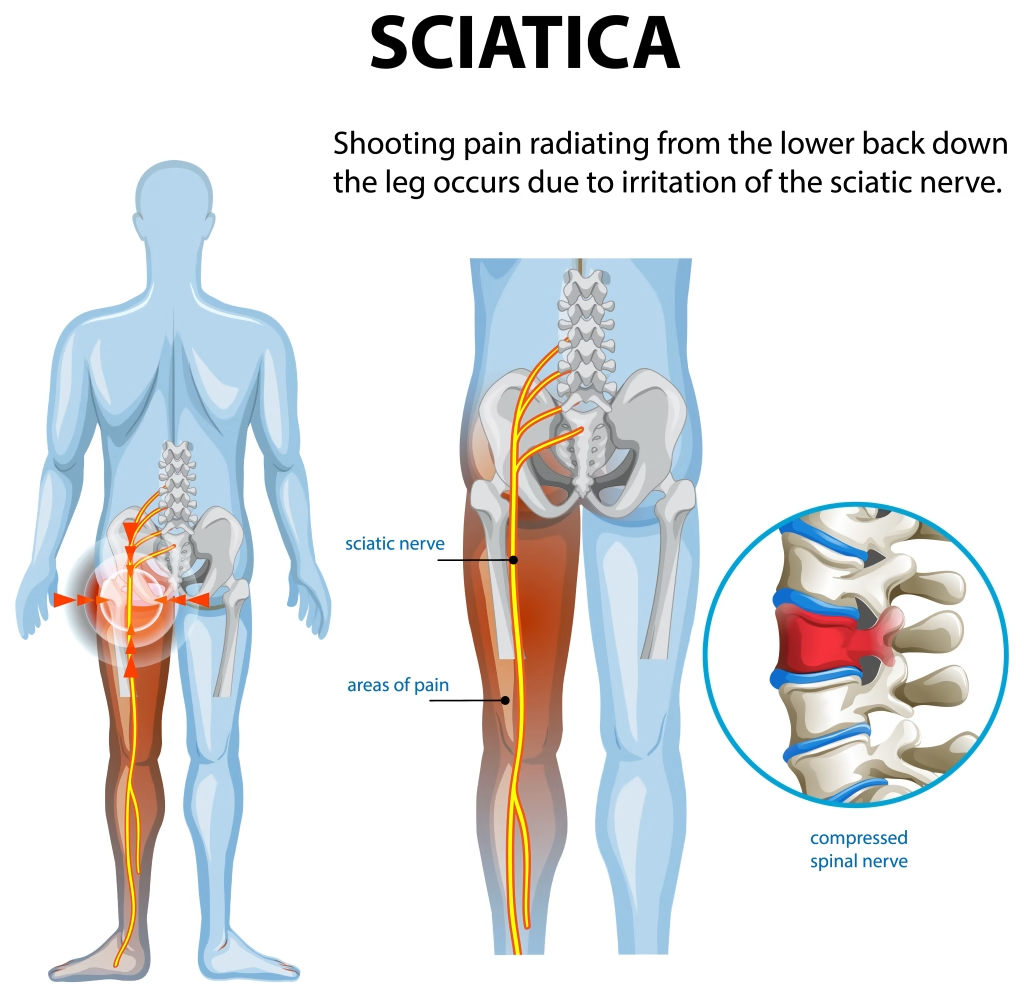
Sciatica is not technically a diagnosis in itself. It is the name for a set of symptoms that occur when the sciatic nerve, or one of the nerve roots that form it, is compressed or irritated. The sciatic nerve is the largest nerve in the human body. It originates in the lower spine from nerve roots at the L4 through S3 levels, travels through the pelvis and buttocks, and runs down the back of each leg all the way to the foot. When something presses on this nerve, the pain and other sensations follow its path.
The medical term for the underlying condition is lumbar radiculopathy. Most people use the word sciatica loosely to describe any radiating leg pain that seems to come from the back, and clinicians generally accept that usage. What matters most is identifying the source of the nerve compression so treatment can target it correctly.
According to the Mayo Clinic, sciatica most commonly occurs when a herniated disc, bone spur, or narrowing of the spinal canal compresses part of the nerve. This compression creates inflammation, pain, and often numbness in the affected leg.
Sciatica is extremely common. Research estimates that the lifetime prevalence is somewhere between 13% and 40%, meaning a substantial portion of the adult population will deal with it at some point. It tends to peak in people between the ages of 30 and 50, though it can occur at any age.
Recognizing Sciatica Symptoms
The hallmark of sciatica is radiating pain on one side of the body. Sciatica symptoms do not usually stay in one spot. They travel, often starting in the lower back or deep in the buttock, then moving down the back or side of the thigh, through the calf, and sometimes all the way into the foot or toes. That traveling quality is what separates sciatica from ordinary low back pain.
People describe sciatica symptoms in very different ways. Some say it feels like a burning or shooting sensation, almost like an electric shock running down the leg. Others describe it as a deep ache. Some experience a combination of both, along with numbness or a pins-and-needles feeling, the same sensation you get when a foot falls asleep. Muscle weakness in the affected leg is also possible, and in some cases it becomes difficult to flex the foot or maintain a normal walking pattern.
The most commonly reported sciatica symptoms include:
1. Pain that radiates from the lower back through the buttock and down the leg, usually on one side only
2. Sharp, shooting, or burning sensations along the path of the sciatic nerve
3. Numbness or reduced sensation in the leg, calf, or foot
4. Tingling or a pins-and-needles feeling in the affected leg
5. Muscle weakness in the leg or difficulty moving the foot
6. Pain that worsens when sitting, coughing, sneezing, or making sudden movements
7. Discomfort that may be constant or may come and go in flares
One thing worth knowing is that sciatica symptoms rarely affect both legs at the same time. If you are experiencing pain, numbness, or weakness in both legs simultaneously, that is a different and more urgent situation that warrants prompt evaluation, which we cover in the red flags section below.
Who Is More Likely to Develop It? Risk Factors Worth Knowing
Sciatica can happen to almost anyone, but certain factors raise the probability. Understanding them is useful both for prevention and for making sense of why you may be experiencing the condition now. The good news is that most of the significant risk factors are modifiable, meaning lifestyle changes can genuinely reduce your risk.
Age is the most consistent non-modifiable factor. The spinal changes that most commonly lead to sciatica, including disc herniation, stenosis, and bone spur formation, become more prevalent as we get older. That said, younger adults with physically demanding jobs or poor posture are far from immune.
Modifiable risk factors identified by peer-reviewed research include prolonged sitting, especially with poor posture; carrying excess body weight, which increases the load on the lumbar spine; heavy manual labor and repeated lifting with poor technique; smoking, which reduces blood flow to spinal discs and impairs their ability to heal; whole-body vibration from driving heavy equipment or machinery; and having a sedentary lifestyle with weak core muscles that offer less support to the lower back.
Living with radiating leg pain in Queens? The team at Doctors of New York in Flushing provides comprehensive evaluation and personalized treatment for sciatica and related nerve pain conditions. Serving patients from Flushing, Long Island City, Astoria, Jackson Heights, Forest Hills, Bayside, and surrounding areas. To book an appointment, call 9299280175 or stop by our clinic in Flushing, Queens, NY.
How Is Sciatica Diagnosed?
Diagnosis usually begins with a thorough clinical history and a physical examination. Your doctor will ask about where the pain is, when it started, what makes it better or worse, and whether you have any numbness, tingling, or weakness. A straight-leg raise test, where you lie flat and the doctor lifts your leg, is a standard part of the physical exam. When this movement reproduces radiating leg pain, it is a strong indicator of sciatic nerve involvement.
Imaging studies such as MRI, CT scans, or X-rays are not always required for straightforward cases. According to clinical guidelines published in peer-reviewed literature, imaging is most useful when red flag symptoms are present, when surgery is being considered, or when symptoms have not improved after six to eight weeks of conservative treatment. An MRI is generally the preferred imaging test because it shows the soft tissue structures, including discs and nerve roots, in clear detail.
Treatment Options: From Self-Care to Specialist
Diagnosis usually begins with a thorough clinical history and a physical examination. Your doctor will ask about where the pain is, when it started, what makes it better or worse, and whether you have any numbness, tingling, or weakness. A straight-leg raise test, where you lie flat and the doctor lifts your leg, is a standard part of the physical exam. When this movement reproduces radiating leg pain, it is a strong indicator of sciatic nerve involvement.
Imaging studies such as MRI, CT scans, or X-rays are not always required for straightforward cases. According to clinical guidelines published in peer-reviewed literature, imaging is most useful when red flag symptoms are present, when surgery is being considered, or when symptoms have not improved after six to eight weeks of conservative treatment. An MRI is generally the preferred imaging test because it shows the soft tissue structures, including discs and nerve roots, in clear detail.
If you are in the Queens area and struggling with persistent nerve pain, connecting with experienced pain management doctors in Queens, NY gives you access to the full range of these treatment options under one roof, coordinated and personalized to your specific condition.
When to See a Doctor for Sciatica
Not every episode of back and leg pain needs a same-day appointment. Mild sciatica that came on gradually and is slowly improving with rest and basic self-care may respond well without immediate medical intervention. But there are situations where waiting is not the right call, and recognizing them could genuinely prevent serious, lasting harm.
You should schedule an appointment with a pain management specialist near Flushing or your primary care physician if any of the following apply:
1. Your pain has not improved after two to four weeks of self-care
2. The pain is severe enough that it is significantly limiting your ability to work, sleep, or carry out daily activities
3. You are experiencing noticeable muscle weakness in the leg, such as difficulty lifting the foot or keeping your balance
4. Numbness is spreading or worsening rather than staying stable
5. The pain started following a traumatic event such as a fall or car accident
6. You are pregnant and experiencing new or worsening leg pain
Red Flag Symptoms: When Sciatica Becomes a Medical Emergency
There is one scenario in particular that cannot wait for a regular appointment: cauda equina syndrome. This occurs when multiple nerve roots in the lower spinal canal are compressed simultaneously, usually by a massive disc herniation. It is rare, but it is a surgical emergency.
Go to an emergency room immediately if you experience any of the following alongside your back or leg pain:
1. Sudden loss of bladder or bowel control, or new difficulty urinating
2. Numbness or loss of sensation in the saddle area (buttocks, inner thighs, and groin)
3. Rapidly progressing weakness in both legs
4. Severe pain accompanied by fever, chills, or unexplained weight loss
5. Symptoms affecting both legs at the same time
Cauda equina syndrome must be surgically treate
d within 24 to 48 hours of onset to prevent permanent paralysis and loss of bladder and bowel function. Dismissing these symptoms as “just bad sciatica” is a mistake that carries life-altering consequences.
For guidance on the full clinical spectrum of red flags associated with low back pain and radiculopathy, the NIH StatPearls clinical review on sciatica provides a detailed and well-sourced reference that both patients and clinicians can consult.
Getting Help for Sciatica in Flushing, Queens
Queens is one of the most diverse boroughs in the country, and its residents lead lives that can be hard on the spine. Long commutes, physically demanding jobs, long hours at desks, and the general pace of life in New York City all contribute to the kind of mechanical stress that eventually shows up as nerve pain. The good news is that expert help is close by.
Effective pain management in Queens should involve a thorough evaluation of the underlying cause, not just symptom management. Whether the problem stems from a herniated disc, spinal stenosis, piriformis syndrome, or another source, getting an accurate diagnosis is the foundation of a treatment plan that actually works. The right approach might be physical therapy, medication, an injection, or a combination, but it starts with understanding what is driving the pain.
Ready to get a proper evaluation? Doctors of New York in Flushing accepts patients from throughout Queens, including Long Island City, Astoria, Jackson Heights, Forest Hills, and Bayside. Our physicians take a thorough, individualized approach to nerve pain and sciatica care. To book an appointment, call 9299280175 or stop by our clinic in Flushing, Queens, NY. We are here to help you get back to living without pain.
Frequently Asked Questions About Sciatica
How do I know if my leg pain is actually sciatica and not something else?
The most distinguishing feature of sciatica is that the pain radiates from the lower back or buttock down one leg, often past the knee, following the path of the sciatic nerve. It is frequently accompanied by tingling, numbness, or weakness in the leg rather than just localized soreness. Pain that stays in the lower back or hip area without radiating down the leg is more likely a muscular or joint issue. A physical examination, including the straight-leg raise test, helps differentiate sciatica from other causes of leg and back pain.
How long does sciatica usually last?
Most acute cases of sciatica improve within four to twelve weeks with appropriate treatment and rest. About 50% of cases resolve within six weeks. However, roughly 20% to 30% of people experience symptoms that persist for a year or more, particularly if the underlying cause such as a herniated disc or spinal stenosis is not adequately addressed. Starting treatment early and staying active (rather than resting completely) generally leads to faster recovery.
Can sciatica go away on its own without treatment?
Yes, mild to moderate sciatica can resolve on its own, particularly if it is caused by a small herniated disc that the body gradually reabsorbs over time. However, waiting indefinitely without any management is not advisable. Continued nerve compression can cause progressive weakness or permanent nerve damage. If symptoms are not clearly improving after two to four weeks, or if they are severe from the outset, professional evaluation is the right step.
Is it okay to exercise with sciatica, or should I rest completely?
Staying gently active is generally better than complete bed rest. Light walking, gentle stretching of the lower back and piriformis muscle, and low-impact movement all support recovery by increasing circulation to the affected area. You should avoid heavy lifting, prolonged sitting, and positions or movements that aggravate the pain. A physical therapist can design a specific exercise program that is safe and effective for your particular situation.
What is the difference between sciatica and a pinched nerve?
The terms are closely related and are often used interchangeably. A pinched nerve is the general concept of nerve root compression. Sciatica refers specifically to the symptoms that arise when the sciatic nerve or the lumbar nerve roots that form it are compressed or irritated. So sciatica is, in most cases, a type of pinched nerve. The medical term for the condition is lumbar radiculopathy, and the treatment approach depends on where exactly the compression is occurring and what is causing it.
Should I see a regular doctor or go straight to a pain management specialist for sciatica?
For a first episode of mild to moderate sciatica, starting with a primary care physician is reasonable. They can confirm the diagnosis, recommend initial conservative treatment, and refer you if needed. However, if your symptoms are severe, not improving after a few weeks, or recurring frequently, seeing a pain management specialist provides access to a broader range of diagnostic and treatment tools, including imaging guidance, nerve blocks, epidural steroid injections, and specialized physical therapy programs.
Can sitting too much at a desk job cause sciatica?
Prolonged sitting is one of the more significant modifiable risk factors for sciatica. When you sit, particularly with poor posture or on a hard surface, the pressure on the lumbar discs and the sciatic nerve increases considerably. Over time, this can contribute to disc degeneration, herniation, or direct nerve compression. If your job requires long hours of sitting, taking regular breaks to stand and move, using ergonomic seating, and strengthening the core through exercise are practical steps that meaningfully reduce your risk.
What treatments are available if physical therapy and medication are not enough?
When conservative treatment has not provided adequate relief after six to eight weeks, there are several evidence-based options. Epidural steroid injections deliver anti-inflammatory medication directly to the area around the compressed nerve root, often providing significant relief for weeks to months. Radiofrequency ablation and nerve blocks are used in certain cases. If structural pathology such as a large disc herniation or significant stenosis is confirmed on imaging and neurological symptoms are worsening, surgical options like a discectomy or laminectomy may be appropriate. A pain management specialist can evaluate your specific situation and recommend the most targeted next step.