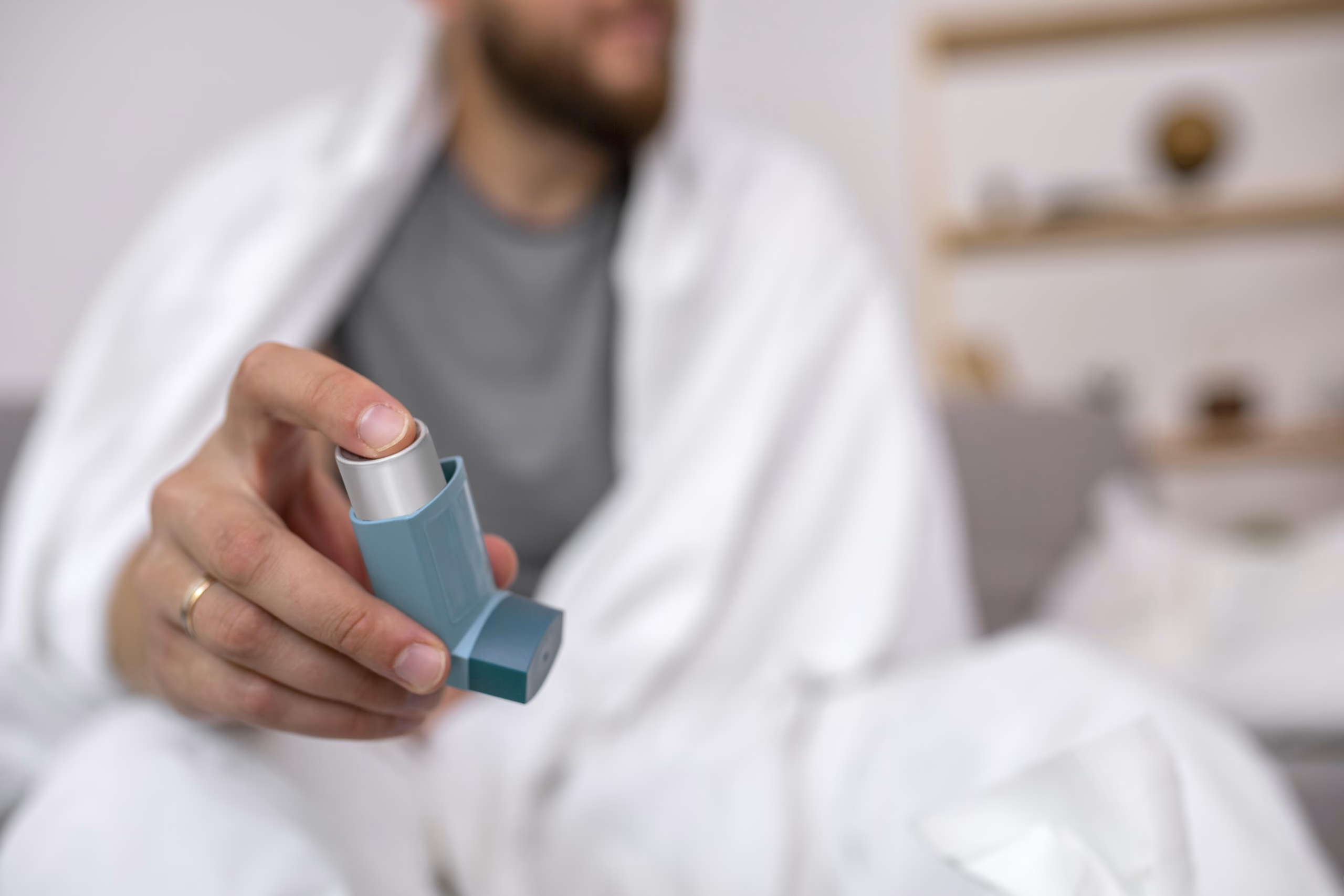
Asthma gets worse in spring primarily because rising pollen counts, especially from oak, birch, maple, and elm trees, trigger airway inflammation in people with allergic asthma. In Queens, New York, peak tree pollen season runs from April through May, and NYC health data shows that asthma-related ER visits spike significantly during these months. Other spring factors including thunderstorms, mold spores, and urban air pollution compound the problem. Managing asthma flare ups in spring requires starting medications early, monitoring daily pollen counts, keeping windows closed, and having a written Asthma Action Plan reviewed by your doctor before the season peaks.
Why Spring Is the Hardest Season for People with Asthma
If your asthma seems to take a sudden turn for the worse every April and May, you are not imagining it. Spring is, without question, the most challenging season for the millions of Americans living with asthma, and that is especially true in Queens, where urban density, aging housing stock, and peak pollen combine into a genuinely difficult environment for anyone with sensitive airways. For individuals actively seeking asthma treatment in Queens, NY, this seasonal spike often highlights the importance of timely, localized care and management.
The reason comes down to what is actually happening in your immune system. When you breathe in pollen, your body treats it as an invader. Antibodies bind to the pollen, triggering the release of histamine and other chemicals that cause your airways to swell, produce mucus, and narrow. That is the mechanism behind coughing, wheezing, and that familiar chest tightness that tells you spring has arrived whether you looked at the calendar or not. For people who have both seasonal allergies and asthma, this response hits on two levels at once, making an asthma flare up in spring far more intense than what the same person might experience at other times of year. Understanding the difference between urgent care or ER for asthma attack situations before symptoms peak is also something every asthma patient in Queens should have clarity on, and we cover that in detail below.
What makes spring particularly ruthless is the volume and variety of pollen in the air. Trees are the main culprits early in the season. Oak, birch, maple, and elm begin releasing pollen in late March and reach their peak in April and May across the New York City area. According to the American Lung Association, pollen counts are highest on hot, dry, and windy days, while cool and rainy days temporarily push pollen to the ground. Pollen counts in NYC specifically tend to peak between 5 AM and 10 AM, which is exactly the window when most people open their windows and head outside. That instinct, unfortunately, can set off a cascade of symptoms for anyone with asthma.
The Queens Factor: Why Urban Life Makes Spring Asthma Worse
Living in Flushing, Astoria, Jackson Heights, Long Island City, Forest Hills, or Bayside means you deal with some specific environmental dynamics that worsen spring asthma in ways that go beyond what someone in a less dense neighborhood might experience.
One is the urban canyon effect. Tall buildings lining narrow streets trap pollen at street level rather than allowing it to disperse upward and outward. You can be blocks from the nearest park and still be breathing a concentrated dose of tree pollen because the surrounding structures are holding it in place. Another is traffic pollution. Research shows that air pollution can actually cause pollen grains to rupture into smaller particles that penetrate deeper into the lungs, making an already potent allergen even more effective at triggering airway inflammation. Queens has significant traffic corridors running through many of its neighborhoods, and on high-pollen days, that combination of allergens and particulate matter is genuinely difficult for the airways to handle.
Indoor triggers matter here, too. Older apartment buildings, which are common across much of Queens, often have poor ventilation, aging HVAC systems, and chronic moisture issues that encourage mold growth. Cockroach allergen is also a well-documented and underappreciated asthma trigger in urban housing, and it is present year-round rather than just seasonally. If your asthma is worse in spring but never fully settles down between seasons, indoor allergens may be part of what is keeping your baseline inflammation elevated.
NYC Department of Health data reflects all of this clearly. New Yorkers make roughly 260 asthma-related emergency room visits in May alone, compared to around 180 per month during midsummer. The spring spike is real, measurable, and directly tied to tree pollen season.
If you have been managing your asthma on your own through spring and finding it harder each year, the team at Doctors of New York in Flushing can help you build a season-specific plan before symptoms escalate. Walk in or call (929) 928-0175 to schedule an appointment. They serve patients across Flushing, Long Island City, Astoria, Jackson Heights, Forest Hills, Bayside, and nearby communities.
The Role of Thunderstorms in Spring Asthma Flare Ups
There is one spring trigger that most people with asthma never see coming, and it is thunderstorms. The phenomenon of thunderstorm asthma is well-documented in the scientific literature and genuinely surprising in how it works. On a calm or lightly breezy day, large pollen grains often get stopped by the nasal hairs before they reach your lower airways. But when a thunderstorm rolls through, the mechanics change dramatically.
The high humidity associated with storms causes pollen grains to absorb water and rupture, releasing much smaller allergenic particles. Strong downdraft winds then carry those particles to ground level, where they become concentrated in the air you are breathing. If you are outside in the hour before a thunderstorm during spring, you may be inhaling far more allergenic material than you would on a clear high-pollen day, because the particles are both smaller and more numerous. According to Harvard Health Publishing, a 2022 study in the Journal of Allergy and Clinical Immunology found that among people with seasonal allergies, about 63% reported experiencing thunderstorm-triggered asthma symptoms, and nearly half of those who had an attack ended up seeking emergency hospital treatment.
Spring in New York City brings regular thunderstorm activity, which means anyone dealing with an asthma flare up in spring needs to monitor weather forecasts as carefully as pollen counts. If storms are in the forecast during April or May, make sure your rescue inhaler is with you, keep windows closed before and during the storm, and stay indoors if possible. This is not being overly cautious. It is understanding how your environment is affecting your lungs.
What Makes Asthma Worse in Spring: A Clearer Picture
To summarize what is actually driving the pattern so many Queens residents notice each year, the reasons your asthma is worse in spring come down to several overlapping factors:
- Tree pollen surges from oak, birch, maple, and elm beginning in late March and peaking through May.
- Late April through May brings a dual pollen wave when tree pollen and early grass pollen overlap, hitting people sensitive to both simultaneously.
- Warm, dry, windy mornings (the most enjoyable spring weather) are also peak pollen dispersal conditions.
- Thunderstorms break pollen into smaller particles that bypass your upper airway defenses and reach the lungs directly.
- Rising humidity encourages mold spore production, which is a separate airway trigger that compounds pollen exposure.
- Urban air pollution in Queens reacts with pollen, making the particles more potent and irritating.
- Opening windows in spring to enjoy the weather floods indoor spaces with outdoor allergens that then accumulate on surfaces, bedding, and clothing.
Understanding this overlap is what separates people who manage spring asthma well from those who spend the season surprised by flare ups they feel like they should have seen coming.
Practical Steps to Reduce Spring Asthma Flare Ups
The most important thing a person with asthma can do in spring is not wait for symptoms to show up before acting. By the time you are wheezing on a Tuesday in late April, you are already behind the curve. Here is a practical approach that works:
- Start controller medications and allergy treatments one to two weeks before peak pollen season, which in Queens means initiating your regimen in mid-to-late March.
- Check the daily air quality index and pollen count every morning before going outside. The NYC DOHMH and EPA AirNow both provide reliable data. An AQI above 101 is particularly concerning for people with asthma.
- Keep windows closed during high-pollen periods and run your air conditioning on recirculate rather than drawing in outdoor air.
- Shower and change clothes when you come inside, especially after mornings spent outdoors during peak pollen hours.
- Plan outdoor activities for late afternoon or evening when pollen counts tend to be lower, or after a moderate rain when pollen is temporarily washed from the air (though note that mold counts can rise within 24 hours of heavy rain).
- Use a HEPA air purifier in your bedroom, where you spend roughly a third of your life, to reduce the allergen load on the air your airways are exposed to during sleep.
- If you have not had allergy testing, spring is the right time to pursue it. Knowing exactly which pollens are triggering your airways allows for much more precise and effective treatment, including the option of allergen immunotherapy, which is currently the only treatment that can modify the underlying immune response rather than simply managing its effects.
- Review your written Asthma Action Plan with your doctor before April arrives. If you do not have one, get one. It tells you clearly what to do when symptoms escalate, what medications to use at each stage, and when to seek care.
When to Go to Urgent Care or the ER for an Asthma Attack
This is the question that genuinely matters most, because misjudging it in either direction carries real risk.
Asthma urgent care in Queens, NY is the right choice when your symptoms are moderate and not improving the way they should. Specifically, if you have used your rescue inhaler two or more times and you are still wheezing or coughing, you are having trouble catching your breath but can still walk and talk, or your peak flow meter is reading between 50 and 80 percent of your personal best, an urgent care center can give you nebulizer treatments, assess your oxygen levels, prescribe a short course of corticosteroids, and help stabilize the situation without the long waits of an emergency room.
Go directly to the ER or call 911 if: your lips or fingernails are turning blue or gray, you cannot complete a sentence without stopping to breathe, you are breathing at an unusually rapid rate and feel like no air is getting through, your symptoms are worsening rapidly despite using your rescue medication, or you have a history of severe or life-threatening asthma attacks. These are signs that your oxygen levels may be critically low, and that is not a situation for urgent care. That is a situation for emergency medicine and immediate intervention.
If you are unsure, always choose the higher level of care. An emergency room can do everything urgent care can do and more.
After the Season: Building a Better Baseline
Spring asthma flare ups are not just a symptom management problem. They are a signal about how well-controlled your asthma is at baseline. If you are ending up in urgent care every April, or spending the better part of two months reaching for your rescue inhaler more than twice a week, that pattern deserves a conversation with your doctor, not just reactive treatment year after year.
There are meaningful options available, including updated inhaler regimens, biologic medications for more severe allergic asthma, and allergen immunotherapy that can progressively reduce your immune system’s overreaction to the specific pollens that trigger your symptoms. Allergy testing is the starting point for any of these longer-term strategies, and it is far simpler than most people expect.
The providers at Doctors of New York in Flushing work with patients across Queens, including those in Long Island City, Astoria, Jackson Heights, Forest Hills, and Bayside, to evaluate asthma, identify triggers, and build treatment plans that are realistic for the neighbourhoods and lives these patients actually live in. If this past spring left you feeling like your asthma is not as controlled as it should be, now is a good time to address it. Call (929) 928-0175 or walk in to schedule a visit.
Frequently Asked Questions
- Why does my asthma get so much worse every spring?
Spring brings a surge in airborne pollen from trees like oak, birch, maple, and elm, all of which peak from late March through May. When you inhale these particles, your immune system triggers airway inflammation, leading to swelling, mucus production, and narrowing of the airways. In Queens and across NYC, this seasonal pattern is consistently the most intense of the year for people with allergic asthma. - What are the biggest spring asthma triggers in Queens, New York?
The primary triggers are tree pollen (particularly oak, birch, maple, and elm peaking in April and May), followed by early grass pollen, mold spores released in humid conditions, urban air pollution, and thunderstorms, which break pollen into smaller particles that penetrate deeper into the lungs. Indoor triggers like cockroach allergen and dust mites in older apartment buildings also elevate baseline inflammation. - Can thunderstorms make my asthma worse?
Yes. This is called thunderstorm asthma, and it is well-documented. During thunderstorms, high humidity causes pollen grains to rupture and release much smaller allergenic particles, and storm winds concentrate these at ground level. Research published in 2022 found that about 63% of people with seasonal allergies experienced thunderstorm-related asthma symptoms, and nearly half sought emergency hospital treatment afterward. - When should I go to urgent care versus the ER for an asthma attack?
Go to urgent care if your rescue inhaler is not fully working after two uses, you are still wheezing or short of breath but can speak in full sentences, and your peak flow is at 50 to 80 percent of your best. Go directly to the ER or call 911 if your lips or nails are turning blue, you cannot speak in full sentences, you are breathing very rapidly and feel like no air is moving, or symptoms are worsening fast despite medication. When in doubt, always go to the ER. - How can I tell if my asthma is being triggered by spring allergies specifically?
The clearest sign is a predictable seasonal pattern where symptoms worsen each year during the same weeks in spring and improve once pollen season passes. Accompanying allergy symptoms like itchy or watery eyes, sneezing, and nasal congestion alongside chest tightness and wheezing also point strongly to allergic asthma. Formal allergy testing with a skin prick test or specific IgE blood test can confirm exactly which pollens are responsible. - What time of day is the best time to go outside when you have asthma in spring?
Late afternoon or early evening is generally best. Pollen counts in NYC tend to peak between 5 AM and 10 AM on warm, dry, and windy mornings. Counts drop later in the day and are temporarily reduced after moderate rainfall, though mold spore levels can rise within 24 hours of heavy rain. Checking your local pollen forecast daily helps you plan outdoor time more precisely. - Should I start my asthma medication earlier in spring?
Yes. Starting controller medications and any allergy treatments one to two weeks before peak pollen season, which in Queens means mid-to-late March, is significantly more effective than waiting for symptoms to appear. Nasal corticosteroid sprays and antihistamines need time to build their protective effect, and playing catch-up once pollen counts spike is much harder than establishing coverage in advance. - Is there a long-term treatment that can prevent spring asthma flare ups?
Allergen immunotherapy, either allergy shots or sublingual drops, is currently the only treatment that can modify the underlying immune response rather than just managing symptoms. By gradually exposing the immune system to small amounts of the specific allergens that trigger your asthma, immunotherapy can reduce the severity of reactions over time. It requires allergy testing first to identify your specific triggers, and your doctor can help determine whether you are a good candidate for it.