
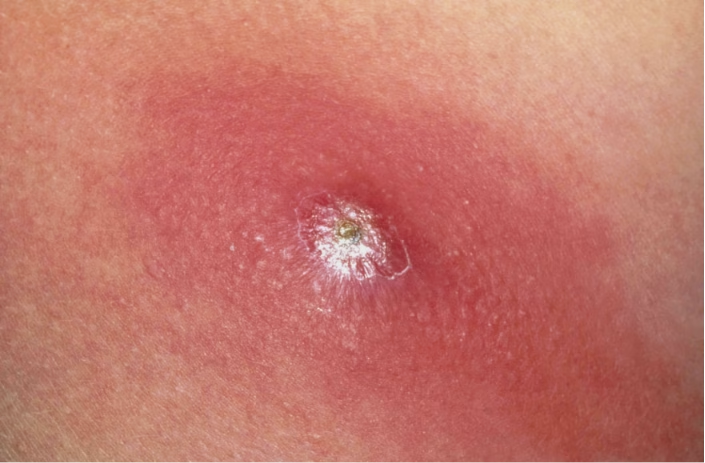
A boil on the inner thigh is usually a staph infection of a hair follicle triggered by friction, sweat, or a small skin break from shaving. Most single, small boils can be treated at home with warm compresses and good hygiene within one to two weeks. See a doctor if the boil is larger than two inches, comes with fever, spreads redness, or keeps recurring, since that can signal a deeper infection or an underlying condition.
If you’ve noticed a tender, swollen bump forming near your groin or between your thighs, you’re not imagining things, and you’re definitely not alone. Boils on inner thigh skin are one of the more common reasons patients come into our clinic, especially during warmer months when friction and sweat are working overtime. Doctors of New York, serving patients across Flushing, Long Island City, Astoria, Jackson Heights, Forest Hills and Bayside, sees this exact complaint often enough that we wanted to lay out what’s actually going on, what you can try at home, and when it’s time to stop waiting it out.
What Exactly Is a Boil, and Why Does It Show Up on the Inner Thigh?
A boil, medically called a furuncle, starts when bacteria, usually Staphylococcus aureus, get into a hair follicle. That bacterium lives on most people’s skin without causing trouble, but the moment it finds a way in through a nick, a scrape, or an irritated follicle, your immune system responds by walling it off. The result is a pocket of pus under the skin that’s red, swollen, and painful to the touch.
The inner thigh is a prime target for a fairly simple reason: it’s a hair-bearing area where two skin surfaces rub together constantly. Add in sweat, heat, tight clothing, or a recent shave, and you’ve got the perfect setup. If your job has you standing or walking a lot, or you’re active outdoors around Astoria or Forest Hills Park during summer, chafing plus moisture is often the real starting point, even before bacteria enter the picture. Getting proper care from a doctor for boil treatment in Queens, NY early on can keep a single irritated follicle from turning into something bigger.
How to Tell If It’s a Boil (And Not Something Else)
Boils on inner thigh skin tend to follow a recognizable pattern. It usually begins as a small, tender, reddish or purplish bump, not unlike an angry pimple, but deeper and firmer. Over two to four days it grows, sometimes reaching over two inches across, and fills with pus. Eventually a yellowish-white “head” forms at the center, and the boil ruptures and drains on its own.
Here’s roughly what to expect as it progresses:
- Day 1 to 2: A small, tender red lump appears, often mistaken for an ingrown hair or a pimple.
- Day 2 to 4: The bump enlarges, becomes firmer, and pain increases as pus builds underneath.
- Day 4 to 7: A visible yellow-white tip forms, marking the boil as “ripe.”
- Day 7 onward: The boil ruptures, drains, and gradually heals, sometimes leaving mild discoloration or a small scar.
Not every thigh bump is a boil, though. Ingrown hairs, sebaceous cysts, and cystic acne can look similar in the early stages, and clusters of recurring boil-like lumps in skin folds can sometimes point to a separate condition called hidradenitis suppurativa. If something doesn’t fit that typical timeline, it’s worth getting an actual look rather than guessing.
What Causes Boils on Inner Thigh Skin in the First Place
A handful of everyday factors tend to line up to create boils on inner thigh areas:
- Friction and chafing from walking, exercise, or tight clothing that irritates hair follicles.
- Heat and trapped sweat, especially during humid New York summers.
- Shaving or waxing that nicks the skin and opens a doorway for bacteria.
- Poor hygiene or infrequent changing out of sweaty clothing.
- Diabetes, obesity, or a weakened immune system, all of which make skin infections more likely and harder to fight off.
- Close contact with someone who carries staph, or sharing towels, razors, or gym equipment.
Most people who get an occasional boil have none of the underlying medical risk factors. It’s usually just friction and bacteria doing what they do. But if boils keep showing up, that pattern is worth paying attention to.
Home Care That Actually Works
For a single, small boil with no fever and no rapid spreading, home care is often reasonable, at least as a starting point. Here’s what actually has some backing behind it:
- Apply a warm, moist compress to the area for about ten minutes, several times a day. This encourages the boil to come to a head and drain naturally.
- Never squeeze, pop, or try to lance it yourself. It feels satisfying in theory, but it can push the infection deeper or spread bacteria to nearby follicles.
- Once it starts to drain, keep it covered with a clean, dry bandage and change it regularly.
- Wash your hands thoroughly after touching the area, and use a separate towel and washcloth so you’re not spreading bacteria elsewhere on your body.
- Wash any clothing, sheets, or towels that touched the area in hot water.
- Take an over-the-counter pain reliever like acetaminophen or ibuprofen if it’s uncomfortable, which can also help with a low-grade fever if one shows up.
If you’re dealing with recurring boils on inner thigh skin despite doing all of this correctly, home care alone probably isn’t going to solve the underlying issue. That’s usually the point where we start asking about hygiene routines, blood sugar, or possible staph carriage in the nose or skin folds, since those are common culprits behind boils that just won’t quit.
When to Actually Go See Someone
Most people wonder how to get rid of boils on inner thigh bumps without setting foot in a clinic, and honestly, plenty of small ones do resolve with home care alone within a week or two. But there’s a real difference between “watch and wait” and “this needs a professional.” See a doctor if:
- You have more than one boil at the same time.
- The boil is larger than about two inches or getting bigger fast.
- It hasn’t started to improve after a week of home care.
- It never seems to “come to a head” on its own.
- It’s a boil in the groin area specifically, which tends to need closer follow-up.
- You keep getting them; three or more in a year is generally considered a recurring pattern worth investigating.
Go in the same day, or to urgent care, if you notice a fever, chills, red streaking spreading out from the boil, increasing pain, or you just feel generally unwell. These are signs the infection may be moving beyond the local area, and while it’s rare for a boil to lead to something like a bloodstream infection, it’s not a risk worth sitting on. If you’re located near Flushing, Long Island City, or Bayside and something about your boil feels off, it’s genuinely faster and safer to have a boil treatment doctor take a look than to keep guessing at home.
How Doctors of New York Actually Treat Boils
When a boil doesn’t drain on its own, or it’s large, deep, or recurring, we typically perform an in-office incision and drainage. It’s a quick procedure done under local anesthesia, and for larger boils we may pack the wound with sterile gauze to keep it draining properly as it heals. If there’s a fever, spreading infection, or a pattern of recurrence, we may also prescribe antibiotics, and for repeat cases we’ll sometimes send a pus sample to the lab to check for antibiotic-resistant staph or rule out an underlying condition like diabetes that could be feeding the cycle.
We’ve had plenty of patients from Jackson Heights and Forest Hills come in assuming they just needed antibiotics, only to find the real fix was proper drainage plus a short course of medication together.
If your bump on the inner thigh isn’t improving, our team at Doctors of New York in Flushing is set up to handle it in one visit. Call us at +19299280175 to book an appointment, or stop by the clinic if you’d rather have it looked at the same day.
A Few Things Worth Avoiding
- Don’t share razors, towels, or workout gear while you have an active boil, since staph spreads easily through direct contact.
- Don’t wear tight, non-breathable clothing over the area while it’s healing; it just adds more friction and trapped moisture.
- Don’t ignore a boil that keeps growing past the one-week mark, assuming it’ll “just go away.”
- Don’t skip the follow-up if your doctor drains a boil and mentions culture results; that information actually matters for preventing the next one.
The Bottom Line
A single small boil on the inner thigh is usually nothing more than an irritated hair follicle that got infected, and it’ll often resolve with warm compresses, patience, and basic hygiene. But size, fever, spreading redness, and recurrence are the four signals that separate “wait it out” from “get it looked at.” According to trusted sources like the Mayo Clinic, those same warning signs apply no matter where on the body the boil shows up. If you’re based anywhere near Flushing, Astoria, or Long Island City and you’re dealing with a boil that’s not cooperating, Doctors of New York is here to help you sort it out properly rather than leave you guessing. Reach us at +19299280175 to schedule a visit, or come by the clinic directly if you’d like it checked today.
Frequently Asked Questions
Q: Can a boil on my inner thigh go away on its own without popping it?
A: Yes, many small boils drain naturally on their own within one to two weeks if you use warm compresses and keep the area clean. The key is patience and not squeezing it, since that can push the infection deeper or spread bacteria to nearby skin.
Q: Is a boil on the inner thigh contagious?
A: The bacteria that cause boils, usually staph, can spread through direct skin contact, shared towels, razors, or clothing. It’s a good idea to avoid sharing personal items and to wash your hands after touching the area until it’s fully healed.
Q: What’s the difference between a boil and an ingrown hair on the inner thigh?
A: An ingrown hair is usually smaller, less painful, and often has a visible curled hair trapped under the skin. A boil is deeper, more tender, grows larger over several days, and fills with pus. If you’re not sure which one you’re dealing with, it’s worth getting it checked rather than treating it the wrong way.
Q: Why do I keep getting boils on my inner thigh?
A: Recurring boils on inner thigh skin can point to ongoing friction and sweat, staph bacteria living in your nose or skin folds, or underlying issues like diabetes or a weakened immune system. Three or more boils in a year is generally considered a pattern worth having evaluated.
Q: Should I use a heating pad or ice on a boil?
A: Warm compresses are recommended, not ice. Heat helps bring the boil to a head and encourages natural drainage, while ice doesn’t offer the same benefit and can slow the process down.
Q: Can I pop a boil at home with a needle?
A: No, you shouldn’t lance or pop a boil yourself. Doing so can push bacteria deeper into the skin or spread the infection to nearby areas. If a boil needs draining, it’s safer to have that done by a medical professional.
Q: How long does it take for a boil on the inner thigh to heal completely?
A: Most boils go through their full cycle, forming, coming to a head, draining, and healing, within one to three weeks. If yours is still growing or hasn’t improved after a week of home care, it’s a good idea to have it looked at.
Q: Do I need antibiotics for a boil?
A: Not always. Small, single boils often heal with home care alone. Antibiotics are typically used for boils that come with fever, are spreading, are part of a cluster (carbuncle), or keep recurring.